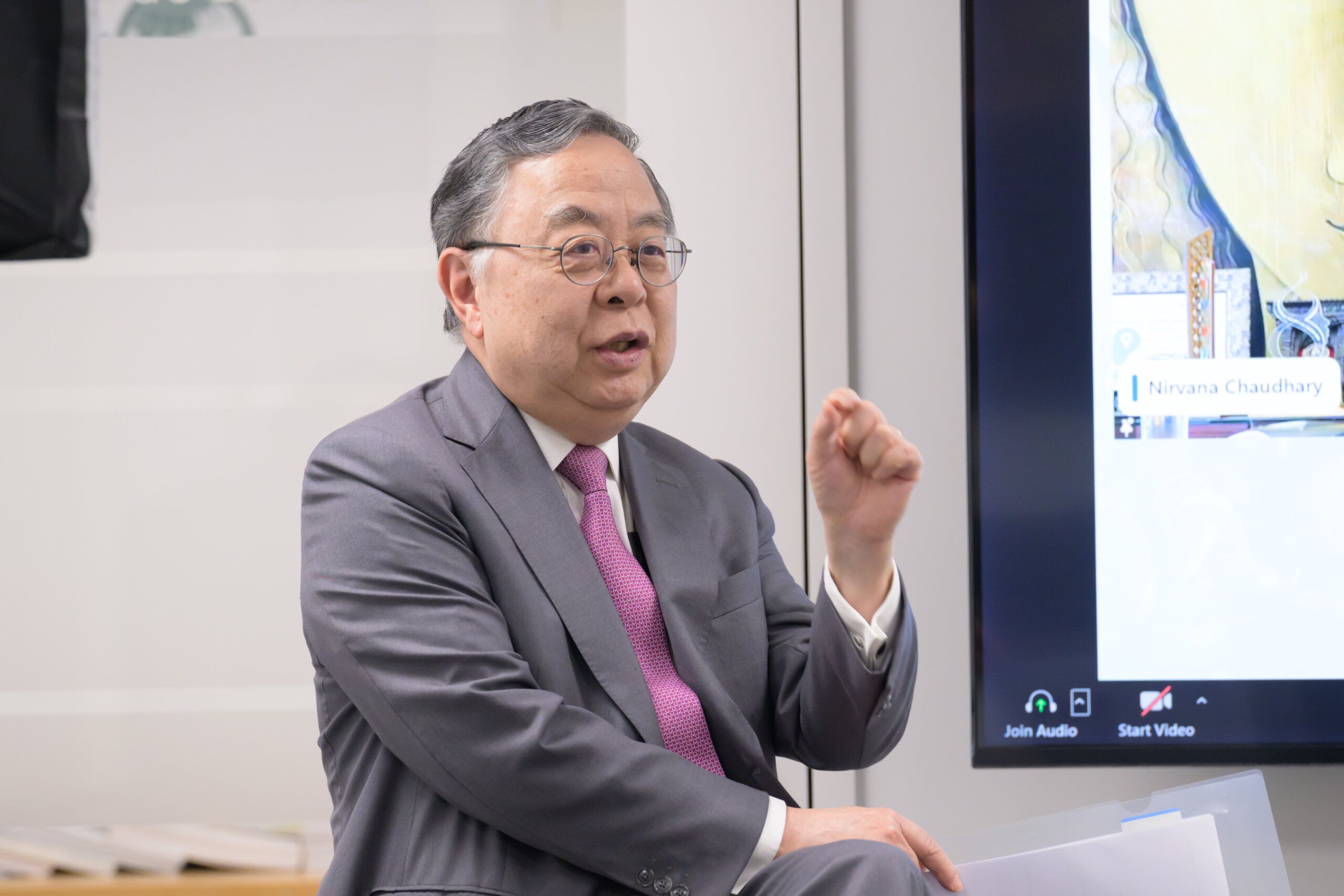
At the launch event for the Doing Good Index 2024, CAPS’ Co-Founder and Chief Executive, Dr. Ruth Shapiro, hosted a fireside chat with Mr. Ronnie Chan, Co-Founder and Chair of CAPS and Honorary Chair of Hang Lung Properties, and Mr. Nirvana Chaudhary, Managing Director of CG Corp Global and member of CAPS’ Advisory Board. They discussed donors’ perspectives on philanthropic giving in Asia and how collaborative efforts can supercharge efforts to address social challenges.
Ruth: Good afternoon, both, and thank you for joining me for our launch event. I wanted to start with a very broad question: What do you think the role of philanthropy is?
Nirvana: As a member of a corporate family, philanthropy is a vision set by a founder or leading family member who sets out to make a difference in some area within a given economy.
Philanthropy goes beyond just charity. A charitable dollar has one life, but a philanthropic dollar has multiple lives. That is exactly how corporate philanthropy functions. Corporate philanthropists set out to eradicate a social problem. They leverage their corporate infrastructure, network and resources and address challenges by applying private sector resources and a business-oriented mindset towards philanthropic ends. They measure returns not in terms of profit but the impact they create.
Ronnie: This question has many layers. In terms of individual motivation, philanthropy is a means of gaining joy and satisfaction, driven by the knowledge that one has done well for society. However, philanthropy alone cannot solve the world’s problems. So, how do you leverage the dollars that you do have? It works best if you leverage your dollar to do the work of two or three dollars.
A famous Hong Kong philanthropist used her philanthropic dollars to vaccinate people in the poorest province in China, which then prompted the government to vaccinate the whole country. That’s the ripple effect that philanthropy can have–one philanthropist working in one poor province was so successful that she shaped government policy. So, I think that ingenuity and creativity can really abound in this space, and the world has yet to scratch the surface of what philanthropy can offer. We are potentially entering a “golden era” of philanthropy in the sense that we may see a lot of ingenuity. This is particularly true of Asia because philanthropy is still a growing sector here, unlike in Europe or the US.
Ruth: Nirvana, can you share with us an example from either the Chaudhary Foundation or Nepal, more generally, where philanthropy demonstrated the viability of an initiative and the government picked it up?
Nirvana: In 2015, Nepal experienced a devastating earthquake. Approximately 10,000 people died, and 700,000 homes were either damaged or destroyed. Given the sheer complexity and scale of what the government needed to accomplish in terms of relief efforts—complicated by bureaucratic hurdles, policies, and emergency disaster protocol—crisis response was inevitably delayed. That’s where the private sector’s speed and efficiency came in.
The private sector has the unique ability to rapidly mobilize infrastructure and resources to respond to a crisis of this nature. Our company made full use of the resources at our disposal. We opened up 15 of our schools as relief centers, and we used the healthcare branches under the Chaudhary Group to provide relief materials to those affected by the earthquake. Because we had two thousand staff on the ground involved in relief efforts, we knew exactly which families were most affected by the earthquake. The government and various multilateral agencies used our data to determine which homes urgently needed assistance.
Given that so many homes were damaged, we aimed to construct a new home or transition shelter and allocate it to a family in just 15 days. Over the course of a year, we built 5,500 homes, 55 schools, 22 digital classrooms, and 20 clean-water drinking systems. We also rebuilt an entire village with 180,000 homes and a community center and trained 7,000 people.
In comparison, it took the government one year to organize the necessary resources. The government has bureaucratic processes, which can slow relief efforts, especially in developing countries like Nepal. However, the private sector can intervene to a positive end in its limited capacity. There’s no end to how much you can do. Through all this, we continuously partnered with local governments and NGOs with the knowledge and experience necessary for a venture of this scale.
Ruth: Ronnie, much of your family philanthropy is not through Hang Lung but your family’s Morningside Foundation. Nirvana, in your case, your family philanthropy is mostly routed through the Chaudhary Foundation, which is one and the same as the Chaudhary Group. I want to talk about how this plays out because personal and corporate philanthropy are often delinked in the West, whereas in Asia, they tend to be more closely connected. What are your views on this? What are the upsides or the downsides of linking, or not linking, personal philanthropy with corporate philanthropy?
Ronnie: Well, in the West, most large companies are already public entities, so a family’s intervention is by default limited, at least in terms of equity ownership. However, in much of this part of the world, many companies are directly linked to a particular family. As a result, the two entities tend to blend together, the extent of which depends on the level of corporate governance. If the standard of corporate governance is high, then there will be no misuse of funding.
Ruth: My observation has been that when people invest in companies in Asia, they also invest in the families that own them. The investors often know the dominant shareholder very well and decide to invest because they believe the family will continue to make money. So, there is a little bit more latitude for Asian companies to take a more expansive view of family philanthropy and really build up the societies and the communities in which that family lives and the company operates. What do you think, Nirvana?
Nirvana: We consider ourselves a small, 100% family-owned company. But our strategy has always been very clear and emerges in three distinct strands. The first is that the Chaudhary Group has a family-led constitution. As a family, we decided on the areas where we feel we can make the most difference in our homeland, Nepal. For instance, in the health sector, we prioritize funding maternal and child health initiatives and focus on improving child nutrition, with a special focus on stunting. Second, as the Chaudhary Group, we focus on four or five areas. We’re able to leverage our networks and infrastructure to generate a bigger impact.
Third, I run my foundation in a personal capacity. As part of my personal philanthropy, I support orphanages and animal shelters and fund many scholarships. These priorities may not necessarily fit in with my family’s—or the company’s—philanthropic objectives and goals. The role requires me to wear different hats depending on whether I represent myself, my family, or the Chaudhary Group.
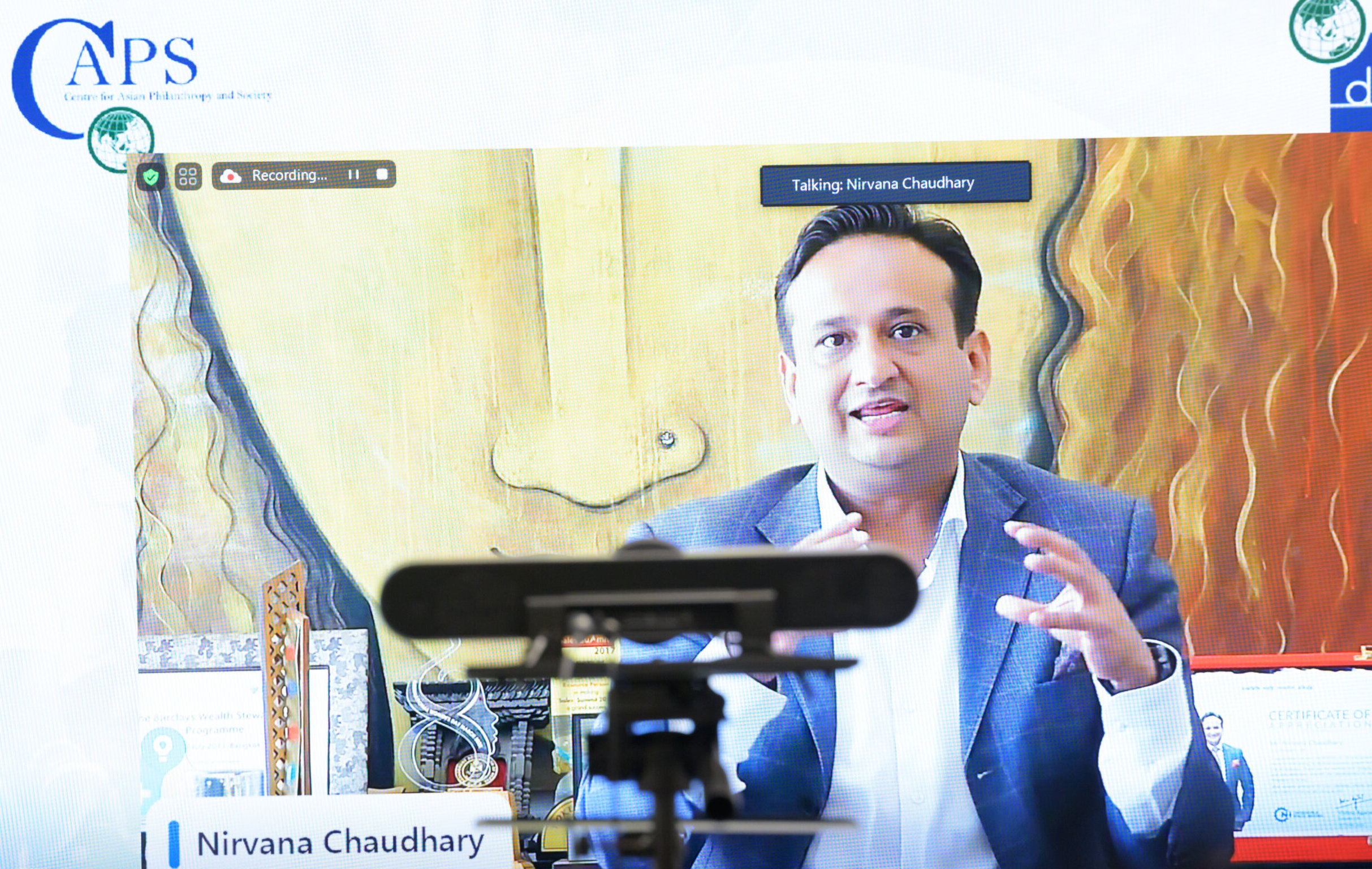
Ruth: In the Doing Good Index, three out of the four sets of major indicators pertain mainly to government policies: regulations, tax and fiscal policies, and procurement policies. Government looms large in Asia. Nirvana, you said you regularly work with the government on your projects. How? And what do you think the role of government should be in helping private individuals, families and companies?
Nirvana: In the context of Nepal, the role of the government is to create the right policies. We rely on the government to create an enabling environment so that we can get the regulatory approvals we need and launch certain social initiatives on time.
For example, our foundation engages in a lot of new development projects in sports and education, and we were lobbying the government to improve the enabling environment around these areas. When the budget for this year was announced, the government declared that sports sponsorships would be considered CSR. No more than a week later, we saw companies start saying, “What more can we do to strengthen sports infrastructure and strengthen cricket academies and football leagues?” That one policy has already started changing the narrative of youth development through sports.
Ruth: I’ve said before that policies and regulations are like cholesterol: good regulations are good cholesterol, and they allow the system to flow. Bad cholesterol, like bad regulations, gums things up. You can’t just not have any regulations, but you need the right scale and type of regulations to spur good behavior and allow both innovation and organizations to flourish.
Both of you have worked with and supported a variety of nonprofit organizations, and also participated in collaborative efforts to bring various actors together to make a larger impact. What are some of the things you have learned about working collaboratively?
Nirvana: I’m currently undertaking a massive task of creating a group of 25-30 different organizations to take part in the Third Pole summit. Nepal is a custodian of the trans-Himalayan region, which consists of nine economies and 1.9 billion people. This region is heavily impacted by global warming, and we need to address this quickly for the future of our people.
I’m leading this initiative, but I am getting government stakeholders, the World Economic Forum, and the Gates Foundation involved. There are several organizations that have expertise and are already doing a lot of things in this space but have not come together collectively. If they collaborated, the impact they generated could be much bigger because right now they are working in isolation.
Ruth: What goes in to attracting collaborative partners such as these?
Nirvana: If you want to create an impact as a philanthropist, you need to have a clear vision and a clear heart. Why would partners collaborate with us? Because we have a proven track record. If they see you have a track record, if they see you have the right strengths, the right competency, the right people, and the right ideas, they will want to work with you. The same thing applies to how the development sector thinks. Organizations want to multiply that dollar investment they’ve got, which normally they would not have expected much return on.
Ruth: Ronnie, you have worked with many philanthropic efforts in which there are multiple funders. Are there certain “rules” for effective collaboration?
Ronnie: When thinking about pooling resources for the common good, it’s about more than just money. 30 years ago, my family provided financial assistance to a community organization in desperate need. But when I look back, my biggest contribution to that organization was not the funding, but rather, I introduced them to a friend of mine who was the Executive Director of one of the biggest real estate companies in Hong Kong at the time. He eventually became the chair of their board. My point is that there are many ways to contribute. Networks and expertise are very, very important.
Ruth: Nirvana, do you have any final thoughts about the evolution of philanthropy in your lifetime? How do you see the perceptions of the sector changing?
Nirvana: I’m seeing a massive change. Because of greater access to information, the younger generation is far more aware of the problems around the world and in their environment.
Ruth: I agree. Thirty years ago, there was the nonprofit philanthropic side, the for-profit investment side, and nothing in the middle. Now, there’s a lot in the middle, with different kinds of financial tools being brought to bear, and that creates a lot of opportunity and innovation. Ronnie, what do you think?
Ronnie: This is a sector that is very, very young. This sector has more innovation and creativity yet to be seen. Intellectual capital, when married with financial capital, can do tremendous good. The message that I want to convey is simple. Perhaps philanthropy is not a sector that will solve the world’s problems, but it will make life a lot more beautiful for the givers and the receivers.